Finding My Place in Science: Damilola Alabi
A Reflection on Northwestern’s 2025 SciHigh Summer Research Program
When I received my acceptance, I was thrilled—but also nervous. Despite living just 30 minutes from downtown Chicago, I had rarely taken the train or navigated the city alone. Everything felt new. But the moment I stepped onto Northwestern’s medical campus, I was struck by how welcoming the environment was, especially the diverse group of peers who quickly became friends.
On the first day, we had lunch with our mentors. I was fortunate to be placed on a joint project between two labs. Meeting my first mentor, Dr. Shayna Bradford, was a turning point. Not only is she an African American scientist pursuing the type of work I one day hope to do, but she also made me feel seen and supported from day one. We walked around campus chatting about our passions, and I knew I had found someone who would help me grow. In Dr. Bradford’s lab, I also had the pleasure of working with Lisa and David, whose kindness made every day enjoyable.
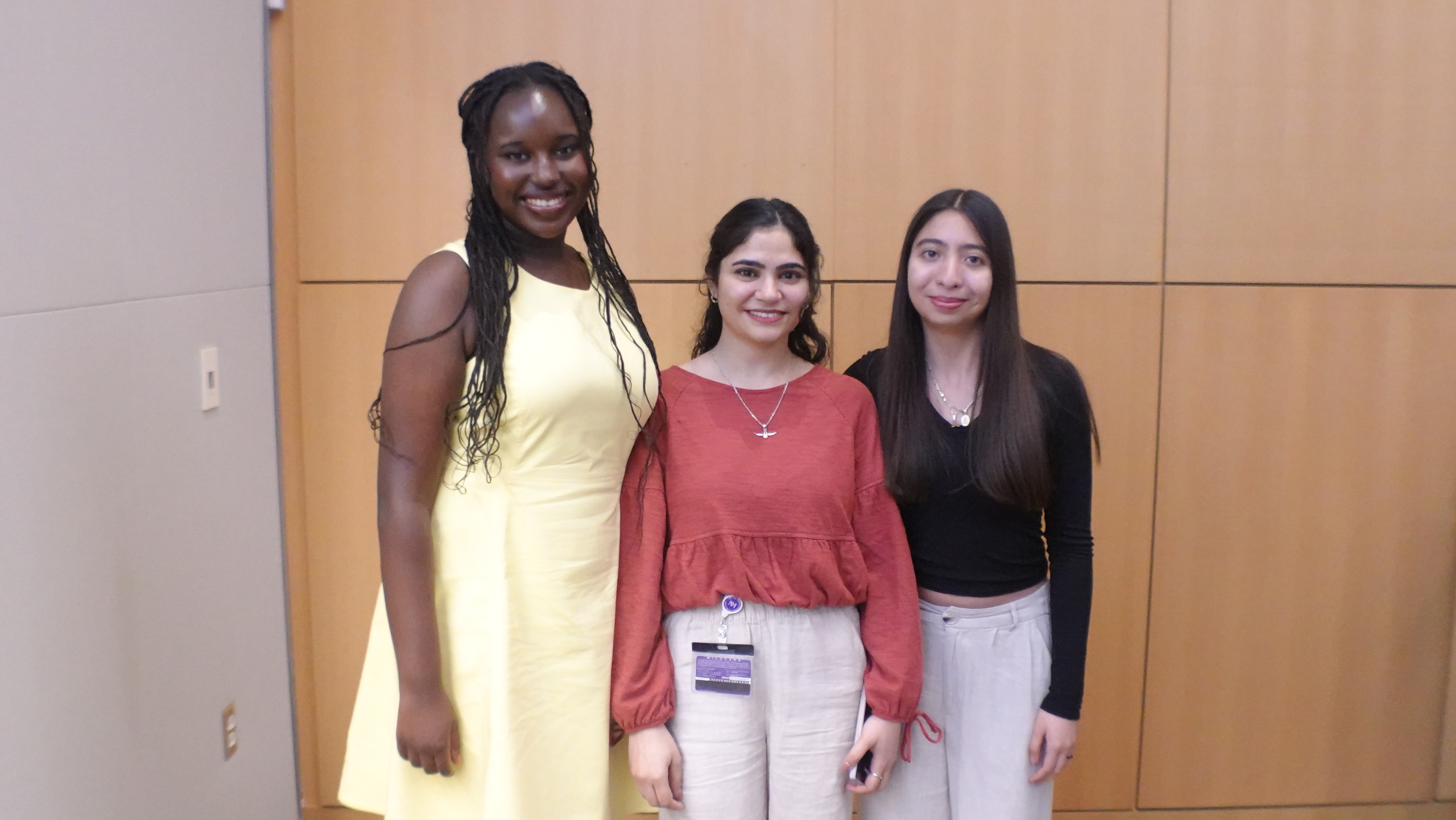 Later, I met my mentors from the Sosa-Pineda Lab—Dr. Saman Khan, Roman Boiarskyi, and Dr. Beatriz Sosa-Pineda. Their warmth and guidance, along with the companionship of my fellow Sci-High scholar Ana Perez, made the lab feel like a second home. Ana and I bonded over lunch breaks, long walks, and shared jokes, and I left the program with a lasting friendship.
My research focused on the role of systemic inflammation in acute kidney injury (AKI) during cerulein-induced pancreatitis. While past studies have focused on the lungs as a target of inflammatory spread, our project explored how acute pancreatitis affects the kidneys—a lesser-studied, but highly vulnerable, organ. Using a cerulein-induced mouse model, we investigated whether pancreatic inflammation could trigger kidney damage. Our findings were compelling: inflammatory molecules traveled from the pancreas to the kidneys via the bloodstream, where they damaged the renal tubules, particularly within the medulla. Histological analysis revealed immune cell infiltration and early signs of AKI. These findings lay the groundwork for future research using more biomarkers and longer-term models to study progression from acute to chronic kidney injury.
This research taught me just how complex and detailed the scientific process is. I learned that even the way a tissue is preserved—cryo vs. paraffin—can dramatically affect staining quality and data interpretation. Over the summer, I gained hands-on experience with a wide array of technical skills:
• Cryosectioning and paraffin sectioning using a microtome
• Hematoxylin and eosin (H&E), trichrome, and immunofluorescence staining
• Proper micropipette technique and solution preparation
• Brightfield microscopy and image analysis using Fiji (ImageJ)
• Statistical analysis using One-Way ANOVA and data visualization for a scientific poster
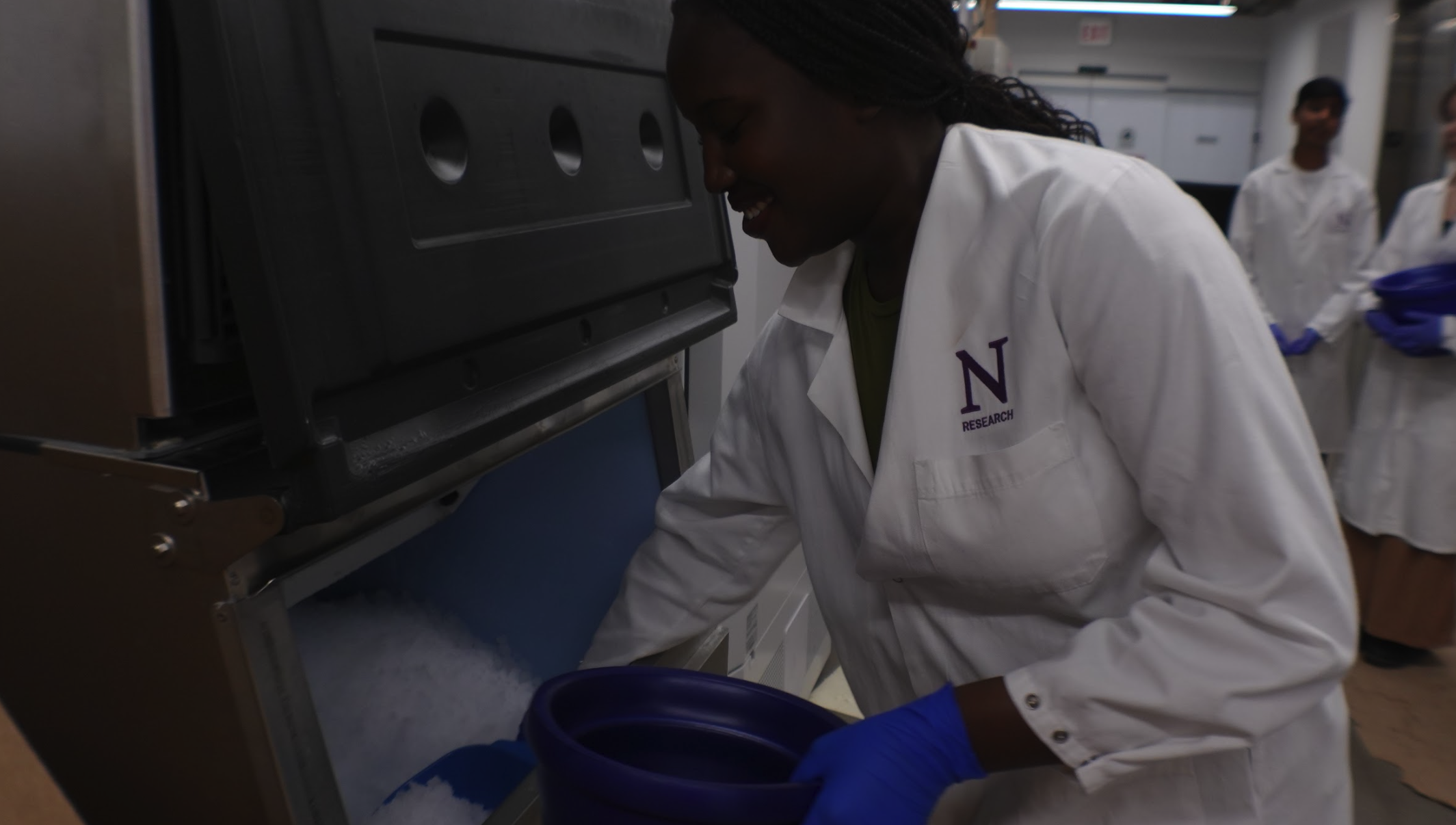
I also made antibody dilutions independently, prepared chemical reagents for the entire lab, and developed the confidence to present and defend my data. More than just learning lab techniques, I grew into someone who can communicate across disciplines and cultures in a professional research environment.
Still, this summer wasn’t without its challenges. At first, I struggled with impostor syndrome—feeling like I didn’t belong or wasn’t qualified enough. But building a strong support system, from mentors to peers, helped me find my footing. I realized that self-doubt is a natural part of growth, and that I had earned my place here. Bonding with my mentor Dr. Saman Khan over food and life stories, laughing with friends in the park, and exploring the city with my cohort—all of it helped me see that scientists are not only brilliant but also incredibly human.
Preparing for the final research showcase was both nerve-wracking and rewarding. This was my first time building a scientific poster from start to finish. I revised it countless times based on feedback, practiced my presentation over and over, and worked hard to clearly explain my data. On showcase day, I stood proudly by my poster, confident and smiling. All the long hours paid off when I was complimented not only for my research but for my ability to communicate it clearly and passionately.
Looking ahead, I am more committed than ever to becoming a physician-scientist. As I begin the college application process, I will prioritize schools with strong research infrastructure and mentorship opportunities. I hope to pursue future work in cancer biology, and I believe this experience has prepared me to thrive in competitive research settings and beyond.
To future Sci-High scholars: approach the summer with curiosity and courage. Take initiative, build relationships, and say yes to new experiences—you never know where they will lead.
To my mentors and peers: thank you for an unforgettable summer. Your encouragement and generosity planted seeds of inspiration that I will carry with me forever. One day, I hope to become a mentor who can do the same for someone else. As Maya Angelou once said, “Do the best you can until you know better. Then, when you know better, do better.” This summer, I learned better—and I plan to keep doing better, every step of the way.